

Austria > Vienna
Overview
Overview
Grand yet approachable, imperial yet creative, Vienna balances stately tradition with a relaxed and deeply ingrained sense of everyday liveability. As the capital of Austria, the city served for centuries as the political and cultural heart of the Habsburg Empire, and its historic core, the Innere Stadt, continues to reflect that legacy in sweeping boulevards, ornate Baroque palaces, dignified civic buildings and elegant townhouses that speak quietly of former imperial power.
Music lies at the centre of Vienna's identity. Mozart, Beethoven, Haydn, Schubert, Brahms and the Strauss family all lived and worked here, shaping what became known as the Viennese Classical tradition. Today, the city sustains that inheritance through its concert halls, churches and opera houses, where performances take place throughout the year and classical music remains part of everyday cultural life rather than simply a historical legacy.
Vienna is equally defined by its coffee-house culture, with marble-topped tables and bentwood chairs inviting long conversations over melange (a classic Viennese coffee with steamed milk) and carefully crafted pastries. The city's traditions extend from the clear voices of the Vienna Boys' Choir to the disciplined grace of the Lipizzaner stallions at the Spanish Riding School, preserving rituals that have endured for centuries.
Founded as a Celtic settlement and later established as the Roman frontier camp of Vindobona, Vienna grew into the administrative centre of a vast empire under the Habsburg dynasty. By the late nineteenth century, it had become a city of intellectual energy as well as political complexity, with figures such as Freud, Klimt and Mahler reshaping European thought and culture.
Most major sights lie within the compact, largely pedestrianised centre. The grand Ringstrasse traces the line of the former city walls and is lined with monumental buildings, while beyond the centre, visitors can explore the Prater with its Giant Ferris Wheel, tour the opulent Schönbrunn Palace, or sample local wines in the taverns of the Vienna Woods.
By wandering its streets and landmarks, visitors will come away with a lasting sense of Vienna's imperial heritage and lively modern culture.
Getting Around
Vienna has one of Europe's best public transport systems, combining buses, trams, the U-Bahn (underground) and S-Bahn (suburban rail). Services are frequent and reliable; the U-Bahn runs from around 5am until shortly after midnight, with 24-hour operation on Fridays, Saturdays and before public holidays, and night buses running daily. The U-Bahn is usually the quickest way to cross the city, while S-Bahn, Railjet and the non-stop City Airport Train (CAT) connect with the airport. Vienna's extensive tram network offers a scenic way to get around.
Tickets are valid across all modes and allow transfers within the time limit. The Vienna Card (24, 48 or 72 hours) includes unlimited public transport and discounts at many attractions. Taxis are reliable and metered, and app-based services such as Uber and Bolt operate citywide. Cycling, e-scooters and walking are also practical options. A car is unnecessary within the city but useful for trips beyond it.
Restaurants & Nightlife
Restaurants
}Austrian cuisine reflects centuries of Central European influence, blending traditions from across the former Habsburg Empire. Many contemporary chefs reinterpret classic Viennese dishes through the principles of nouvelle cuisine, creating what is known as Neue Wiener Küche (New Viennese cuisine).
Vienna is especially renowned for its pastries and café culture. Signature dishes include Wiener Schnitzel, Gulasch and Tafelspitz (boiled beef traditionally served with apple-horseradish sauce), while classic desserts such as Sachertorte and Apfelstrudel are must-tries. A small glass of Schnapps is sometimes offered after a meal. Although lunch was traditionally the main meal of the day, many people now favour a larger evening dinner.
Vienna's restaurant scene is vibrant and varied, with options for all budgets. Popular areas for dining include the MuseumsQuartier and surrounding 7th district for lively cafés and bars; Spittelberg for atmospheric streets lined with restaurants; the Naschmarkt and nearby Freihaus quarter; and Gumpendorfer Strasse, an increasingly fashionable stretch for contemporary eateries.
Nightlife
Vienna's nightlife is relaxed rather than frenetic, but the city promises plenty of options after dark. The Innere Stadt is known for its elegant cocktail bars and historic venues, including Adolf Loos' celebrated American Bar, while livelier scenes can be found in the 6th and 7th districts, where independent bars and creative spaces cluster around Neubau and Mariahilf. In summer, the beach-style bars at Copa Cagrana along the Danube provide a more casual setting.
The Gürtel district has long been associated with live music and club culture, attracting fans of electronic and alternative sounds. For those seeking high culture, Vienna's reputation as a musical capital ensures a rich evening programme of opera, ballet and classical concerts at venues such as the State Opera and the Musikverein.
Shopping
Vienna offers a rewarding blend of grand boulevards, elegant arcades and lively neighbourhood streets for shoppers of all tastes. The city's principal shopping artery, Mariahilfer Strasse, stretches west from the centre and is lined with major international brands, department stores and popular high-street labels. Closer to the historic core, the refined streets of Graben, Kohlmarkt and Tuchlauben are home to luxury boutiques, fine jewellers and long-established Viennese businesses whose window displays are as polished as their merchandise.
Those seeking local specialities will find plenty to tempt them, from Augarten porcelain and handcrafted leather goods to gourmet delicacies and traditional sweets. The Naschmarkt near Karlsplatz is a favourite destination for food lovers, thanks to weekday produce stalls and a lively flea market on Saturdays, while in December the square before City Hall is transformed by one of Vienna's most atmospheric Christmas markets. For a more contemporary feel, the 7th district around Neubaugasse and Spittelberg boasts independent boutiques, vintage shops and creative design stores that reflect the city's modern flair. Visitors from outside the EU can reclaim VAT on eligible purchases with the appropriate documentation.
Sightseeing & Attractions
Sightseeing
Vienna has hundreds of beautiful historic attractions and cultural treasures to explore, from stunning Baroque palaces to the world-famous 'flying' Lipizzaner stallions. The Imperial Palace is home to the Schatzkammer, which is the greatest treasury in the world and holds treasure from as far back as the Holy Roman Empire. The Fine Arts Museum across from the palace houses many of the art collections gathered by the Habsburgs and is sumptuously decorated with marble, gold leaf and stucco ornaments.
Another of Vienna's most recognisable attractions is the giant Ferris wheel called the Riesenrad, which is located in a large wooded park. And for those partial to song and dance, the Vienna State Opera performs a vast repertoire of operas, operettas and ballets.
Vienna has been home to some of classical music's greatest composers, and visitors can easily spend a day touring the residences where Beethoven wrote his 5th Symphony, Haydn composed The Creation, and Strauss wrote the Blue Danube Waltz. No musical tour would be complete without seeing the Mozart Memorial.
Most of the city's attractions are encompassed by the Ringstrasse, which makes them easily accessible, especially on foot or by bike. The Vienna Card is handy for reduced fares when using public transport in the city. With so many beautiful areas, cultural attractions and historic sites, Vienna is definitely a city to spend plenty of time in.
Kids Attractions
With its green spaces, outdoor activities and family-friendly attractions, Vienna is an excellent destination for children. The Vienna Woods offer scenic walks and gentle hikes, while the vast lawns of the Wiener Prater provide plenty of room to run around. The adjoining amusement park, home to the historic Riesenrad Ferris wheel, is a perennial favourite, and the nearby Planetarium has engaging shows for younger visitors.
A visit to the Spanish Riding School to see the world-famous Lipizzaner stallions is a memorable experience, though performances should be booked well in advance; morning training sessions are often easier to secure.
In colder weather, family-oriented museums such as the Zoom Children's Museum in the MuseumsQuartier, the interactive Technisches Museum, and Haus des Meeres (an aquarium housed in a former flak tower) provide excellent indoor alternatives. Schönbrunn Palace also features a dedicated Children's Museum and extensive gardens ideal for exploring.
Attractions
Hofburg
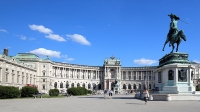
The Hofburg Palace served as the home of the Habsburg dynasty for over 600 years, evolving from a medieval fortress into a sprawling complex with architectural styles ranging from Gothic to Baroque. Today, it houses the offices of the Austrian president and encompasses 22 museums, the Austrian National Library, the 14th-century Augustinian Church, the renowned Spanish Riding School, and the Imperial Chapel. Among the most visited museums are the Kaiserappartements (Imperial Apartments), the Sisi Museum, and the Imperial Silver Collection. The Austrian National Library, established in the 18th century, contains some six million items, including manuscripts, papyri, maps, portraits, music, and historic photographs. Its centrepiece, the Prunksaal (Grand Hall), is a Baroque masterpiece with a soaring dome, ornate statues, and intricate frescoes.
Spanish Riding School
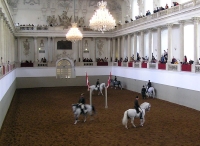
The Spanish Riding School in Vienna is one of the oldest surviving riding schools in the world, where classical dressage is still practised in its purest form. Founded in 1572, the school is named for the Lipizzaner horses, a breed developed from Spanish, Italian, and local Austrian stock. Since the collapse of the Austro-Hungarian Monarchy in 1920, these horses have been bred at the Piber Federal Stud in Styria. The horses perform their famous manoeuvres in the Winter Riding School, a hall commissioned by Emperor Karl VI. Public performances are held between February and June and September and December, but with shows often booked months in advance, the easiest way to see the horses is during morning training sessions. The stables also house the Lipizzaner Museum, which displays the history of both the school and the breed.
Karlskirche
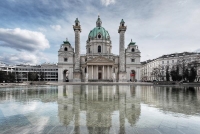
Karlskirche is one of the most striking Baroque churches in Vienna, with its 236-foot (72m dome flanked by two ornate columns forming an iconic feature of the city's skyline. The church was commissioned by Emperor Charles VI after a devastating plague in 1713 and is dedicated to Saint Charles Borromeo, who was revered as a healer during epidemics. Inside, the lavishly decorated interior is adorned with stunning frescoes, and visitors can get a closer look by taking the elevator partway up the dome. From there, a short climb up a spiral staircase leads to the top, where panoramic views of Vienna await.
Schonbrunn Palace
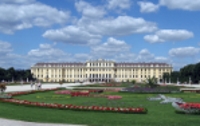
The magnificent Schönbrunn Palace served as the summer residence of the Habsburgs, one of Europe's most powerful ruling dynasties, from the early 18th century onward. Set amid superb formal gardens, this vast and symmetrical Baroque complex embodies the grandeur visitors expect of an imperial palace. A tour of the palace allows visitors to explore the richly decorated Baroque and Rococo State Rooms, including the Great Gallery with its magnificent ceiling frescoes and the Hall of Mirrors, where the young Mozart once performed.
The extensive gardens are popular with both locals and tourists and feature the world's oldest zoo, the Tiergarten Schönbrunn, as well as a maze, the Privy Garden, and the Gloriette, whose terrace offers sweeping views over Vienna. Also within the grounds, the Orangery hosts classical concerts during the summer season.
Giant Wheel
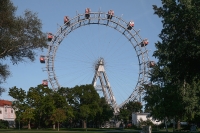
One of Vienna's most recognisable landmarks, the Giant Wheel stands in the Wurstelprater amusement park, which is part of the vast wooded Prater park. Built in 1897 by the English engineers Walter B. Basset and Harry Hitchins, it's one of the oldest surviving Ferris wheels in the world. Its 15 gondolas take about 20 minutes to complete a full rotation, offering magnificent panoramic views over the city. Despite its age, the wheel has been carefully restored and maintained over the decades. A ride on the Giant Wheel is a fun experience for visitors of all ages and remains a highlight of any trip to Vienna.
Belvedere
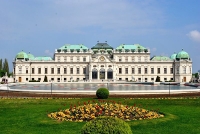
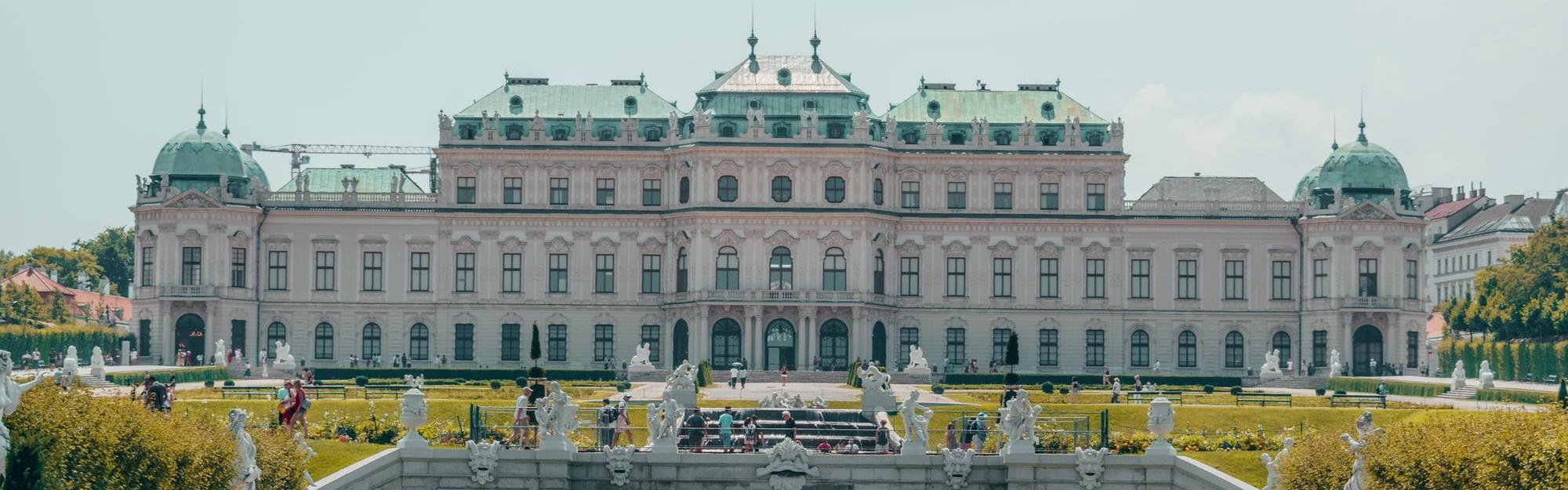
The Belvedere is a world-renowned museum complex housing one of Austria's most important art collections, where visitors will find works ranging from the Middle Ages to the present day. It holds the world's largest collection of paintings by Gustav Klimt, including The Kiss, alongside major works by Egon Schiele, Renoir and Monet. The complex consists of two magnificent early 18th-century Baroque palaces, the Upper and Lower Belvedere, which face one another across formal terraced gardens. The richly decorated state rooms of the Lower Belvedere have largely been preserved in their original Baroque splendour, while the Upper Belvedere houses the principal art collections.
Vienna State Opera
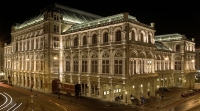
The Vienna State Opera is one of the world's leading opera houses, presenting around 50 to 60 different operas and ballets each season, with performances on most evenings from September to June. The current building opened in 1869 and, after being severely damaged during the Second World War, reopened in 1955 following extensive reconstruction. Today it provides an elegant Neo-Renaissance setting in which to enjoy world-class performances. As seated tickets often sell out, standing-room tickets offer an affordable alternative. The orchestra of the State Opera forms the core of the Vienna Philharmonic, whose famous New Year's Concert requires advance booking, often many months ahead. Even without attending a performance, the opera house itself is well worth seeing.
St Stephen’s Cathedral
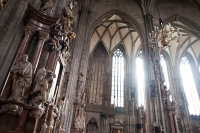
The cathedral is one of the greatest Gothic structures in Europe, thanks to a massive south tower that rises to 445 feet (136m). A dominant feature of the Vienna skyline, its 343 steps can be climbed for panoramic views of the city. Although a Romanesque church was first built on the site in the 12th century, most of the present Gothic structure dates from the 14th and 15th centuries. The cathedral has required continual preservation and repair over the centuries due to fires, sieges, and wartime bombardment. Built largely of limestone, it's crowned by an ornately patterned roof of brightly coloured glazed tiles. The richly decorated interior contains carved woodwork, sculptures, paintings, numerous chapels and altars, and extensive catacombs. Wolfgang Amadeus Mozart was married here and two of his children were baptised here; a funeral blessing was also held at the cathedral before his burial elsewhere in Vienna.
The Albertina
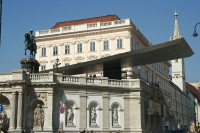
Formerly a Habsburg residence, the Albertina houses one of the world's most important collections of graphic art, including drawings, Old Master prints and modern works. Its holdings comprise more than one million prints and around 65,000 drawings, charting the development of graphic art from the late Middle Ages to the present day, although only a selection can be displayed at any one time. Artists represented include Leonardo da Vinci, Michelangelo, Manet, Picasso and Cézanne. The museum also preserves a suite of elegant state rooms from its days as a royal residence, and visitors can enjoy refreshments at the on-site café.
Museum of Fine Arts (Kunsthistorisches Museum)
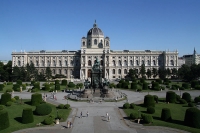
The Kunsthistorisches Museum is one of the world's foremost art museums and houses many of the collections assembled by the Habsburg dynasty, one of Europe's most powerful ruling houses from the late 15th century until 1918. The magnificent building is crowned by a 197-foot (60m) dome, and its interior is richly decorated with marble, gilding and stucco ornament, providing a fitting setting for the artistic treasures gathered over the centuries. The collections range from Ancient Egyptian, Greek and Roman antiquities to medieval, Renaissance and Baroque paintings. The museum stands opposite the Natural History Museum across Maria-Theresien-Platz, and the two grand buildings share almost identical exteriors.
Haus der Musik
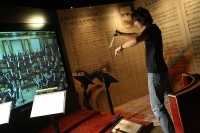
The House of Music is an interactive discovery museum devoted to music that's located in the former palace of Archduke Charles. Spread over four floors, it explores the history of music in Vienna, the science of sound and hearing, and the work of major composers such as Mozart, Beethoven, Brahms and Schubert. Visitors can conduct a virtual orchestra, experiment with digital composition and even experience how sound is perceived before birth. With its innovative and hands-on design, the museum invites visitors to experience music through sight, sound and touch.
Natural History Museum
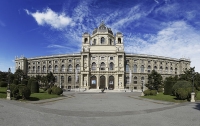
The impressive Natural History Museum in Vienna is housed in a grand Renaissance Revival building that was designed to mirror the Fine Arts Museum across the square. The museum's extensive collections showcase the diversity of the natural world, from minerals and fossils to animals and early human artefacts. Visitors can explore exhibits on the history of the planet and the development of life and culture. Guided tours, lectures, and workshops are regularly offered, providing engaging ways to learn about nature and science.
Wiener Prater
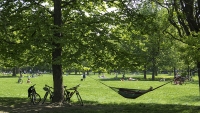
This large public park is a great place for families to enjoy a day in the sunshine. Visitors can stroll along the Hauptallee, where chestnut trees line the way, or visit the Planetarium and the Prater Museum, both located inside the park. The Wiener Prater also has a small amusement park with a Ferris Wheel, a rollercoaster and a number of other fun rides and diversions, as well as food stalls and games booths. There is plenty of open space here for kids to run around and the cheesy, innocent fun of the amusement park is enjoyable for the whole family. Entrance to the park is free but individual rides must be paid for.
Freud Museum
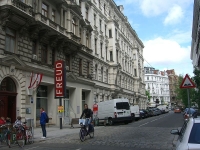
One of Vienna's most famous figures, Dr Sigmund Freud fundamentally changed the study of psychology with his ideas, and terms such as Freudian slip remain widely known. The Freud Museum in Vienna is located at Berggasse 19, the house where he lived and worked from 1891 until 1938. The museum preserves parts of his former practice and living quarters along with exhibits on the development of psychoanalysis and his life. Guided tours are available, and the museum has a shop offering books, photos, and other memorabilia. This attraction will be especially interesting for those curious about Freud and his work, and it provides a good introduction for visitors who are unfamiliar with his legacy.
Climate
Vienna has a temperate continental climate, with warm summers and cold winters. In winter (December to February), average temperatures range from around 28 to 39°F (-2 to 4°C), though colder spells do occur. Summer (June to August) brings average highs of 77 to 82°F (25-28°C), with occasional heatwaves pushing temperatures above 86°F (30°C). Thunderstorms are fairly common in summer, while snowfall is typical in winter, though usually moderate. Spring and autumn (along with early summer) are generally the most pleasant times to visit.
| Jan | Feb | Mar | Apr | May | Jun | Jul | Aug | Sep | Oct | Nov | Dec | |
|---|---|---|---|---|---|---|---|---|---|---|---|---|
| Rain (cm) | 39 | 43 | 41 | 51 | 61 | 74 | 64 | 58 | 42 | 41 | 52 | 46 |
| Rain (inches) | 1.5 | 1.7 | 1.6 | 2.0 | 2.4 | 2.9 | 2.5 | 2.3 | 1.7 | 1.6 | 2.0 | 1.8 |
| Average Temperature (°C) | 0 | 1.6 | 5.6 | 11.1 | 15.5 | 19.5 | 21.4 | 21 | 16.1 | 11 | 6.1 | 1.2 |
| Min Temperature (°C) | -2.9 | -2 | 0.8 | 5.7 | 10.4 | 14.3 | 16.4 | 16 | 11.9 | 7.2 | 3.1 | -1.5 |
| Max Temperature (°C) | 3 | 5.4 | 10.3 | 16.1 | 20.1 | 24.1 | 26 | 25.7 | 20.5 | 15 | 9.2 | 4.1 |
| Average Temperature (°F) | 32.1 | 34.8 | 42.1 | 52 | 60 | 67.1 | 70.5 | 69.8 | 61.1 | 51.8 | 42.9 | 34.2 |
| Min Temperature (°F) | 26.7 | 28.3 | 33.5 | 42.2 | 50.8 | 57.8 | 61.6 | 60.8 | 53.5 | 45 | 37.6 | 29.3 |
| Max Temperature (°F) | 37.5 | 41.7 | 50.5 | 61 | 68.2 | 75.3 | 78.8 | 78.3 | 68.9 | 59 | 48.5 | 39.4 |
Vienna International
The airport is located about 11 to 12 miles (18 to 20km) southeast of Vienna.
Tel: +43 170 070
www.viennaairport.com
Facilities
Array
Car Parking
Array
Car Rental
Array
Taxis
Array
Transfer terminals
Terminals 1, 1A, and 3 are part of one integrated complex, and all areas are easily accessible on foot.
Transfer City
Local trains (S‑Bahn) and buses leave regularly for Vienna. There's also a City Airport Train (CAT), which provides a fast and direct service to Wien Mitte, a centrally located hub connected to the underground, bus, and tram networks. Trains depart approximately every 30 minutes from early morning until late evening.
See map bigger